Introduction
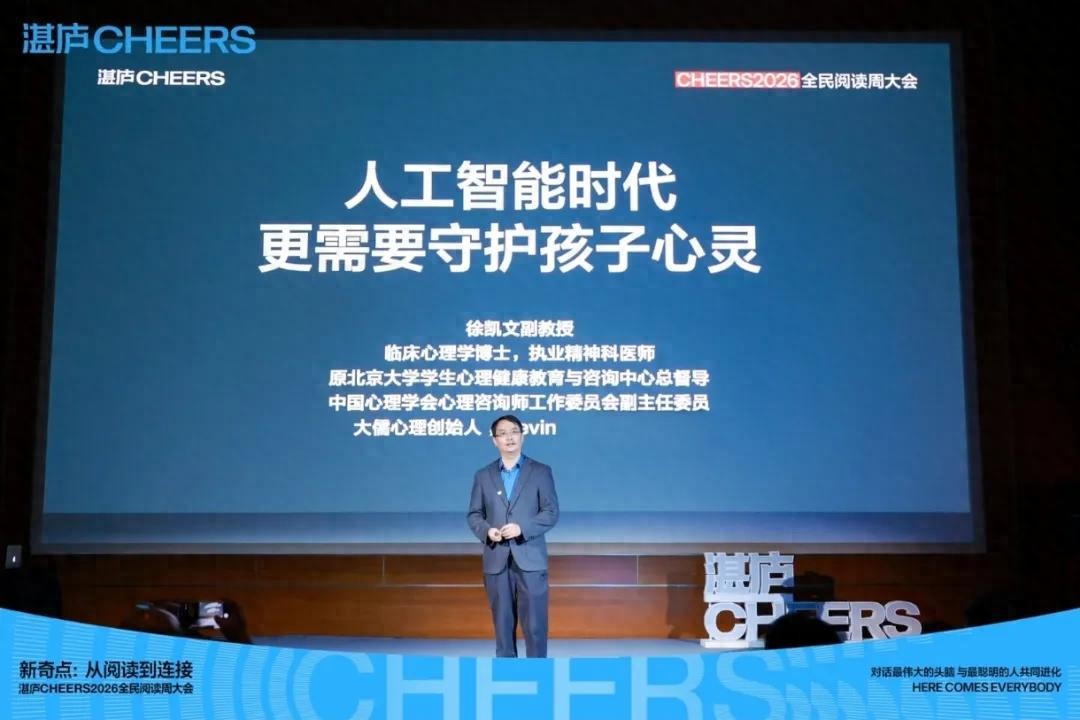
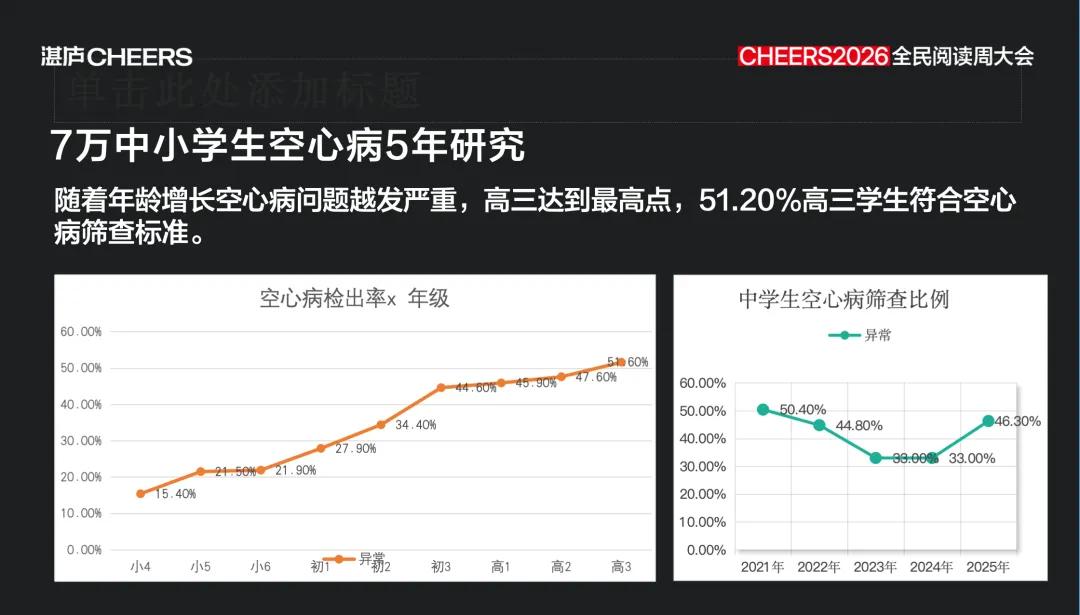
Recently, at the “Zhanlu CHEERS 2026 National Reading Week Conference,” Xu Kaiwen, founder of Duru Psychology and a clinical psychologist, delivered a speech titled “Protecting Children’s Hearts in the Age of Artificial Intelligence.” He highlighted the phenomenon of “hollow disease” observed in 4.53 million college students and 70,000 primary and secondary school students, attributing its causes to educational, technological, and societal issues. He called for reclaiming the initiative in the relationship between technology and humanity to provide a better growth environment for children through collaborative societal efforts.
The Explosion of Psychological Issues Among Youth
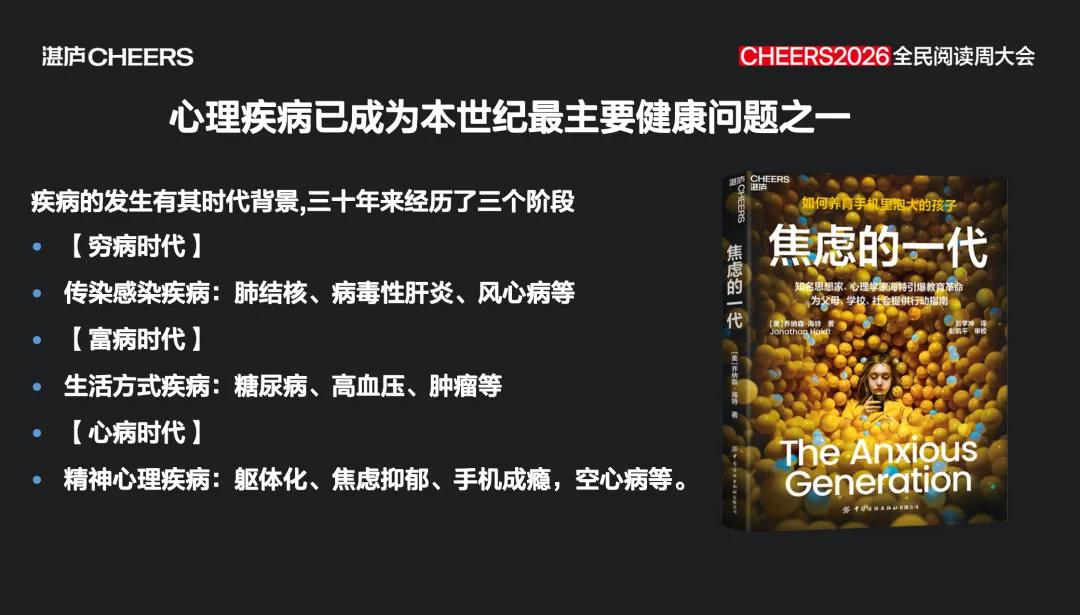
As a psychiatrist, I began my career 30 years ago when psychiatric hospitals were nearly empty. Now, they are overcrowded, reflecting a global trend of increasing psychological issues among youth. Despite living in prosperous times, the younger generations, particularly those born after 2000 and 2010, are experiencing an alarming rise in mental health problems. This seems to be a societal illness. Anxiety is a global challenge, as highlighted by Professor Haite from New York University in his book “An Anxious Generation.”
In the 1990s, when I started practicing, the economy was much poorer, and we faced different health challenges. Now, we are in an era of “heart disease,” where psychological issues are prevalent. Over 50% of patients in hospitals present physical pain that is not due to organic changes but rather emotional somatization. Currently, 1 in 8 people globally suffers from mental disorders, with wealthier nations experiencing more severe mental health issues.
In 2021, a national psychological health survey revealed that 24.6% of adolescents showed symptoms of depression, while 17.5% of children and adolescents were diagnosed with mental disorders. Notably, ADHD (Attention Deficit Hyperactivity Disorder) ranks highest among these disorders, leading to difficulties in concentration and academic performance.
The New Challenge of Technology
“Technological illness” is a new issue we face today. Growing up in the 70s, I did not have access to the internet or advanced technology. While I do not oppose technology, it is essential to recognize its dual nature. In my youth, we engaged in physical activities and social interactions, unlike today’s reliance on screens.
A few years ago, during a training session, a colleague noted that students were more interested in their phones than participating in school events. This shift has led to significant negative impacts on mental and physical health. We are currently collaborating with a prestigious international school to explore whether to limit students’ phone usage. While some cultures offer more freedom to children, this has also resulted in increased issues.
Five Dangers of Smartphones for Adolescents
I summarize the five significant dangers smartphones pose to adolescents:
- Social Deprivation: Children lack real friends, leading to a loss of joy and connection.
- Sleep Deprivation: Many children stay up late using their phones, affecting their sleep quality and emotional stability.
- Attention Distraction: The high prevalence of ADHD can be attributed to constant notifications and distractions from phones, hindering concentration.
- Addiction: Technology companies design products to keep children engaged longer, leading to dependency on devices.
- Personality Changes: Prolonged isolation in virtual worlds can lead to severe social anxiety and emotional issues.

Addressing Psychological Haze Requires Collective Efforts
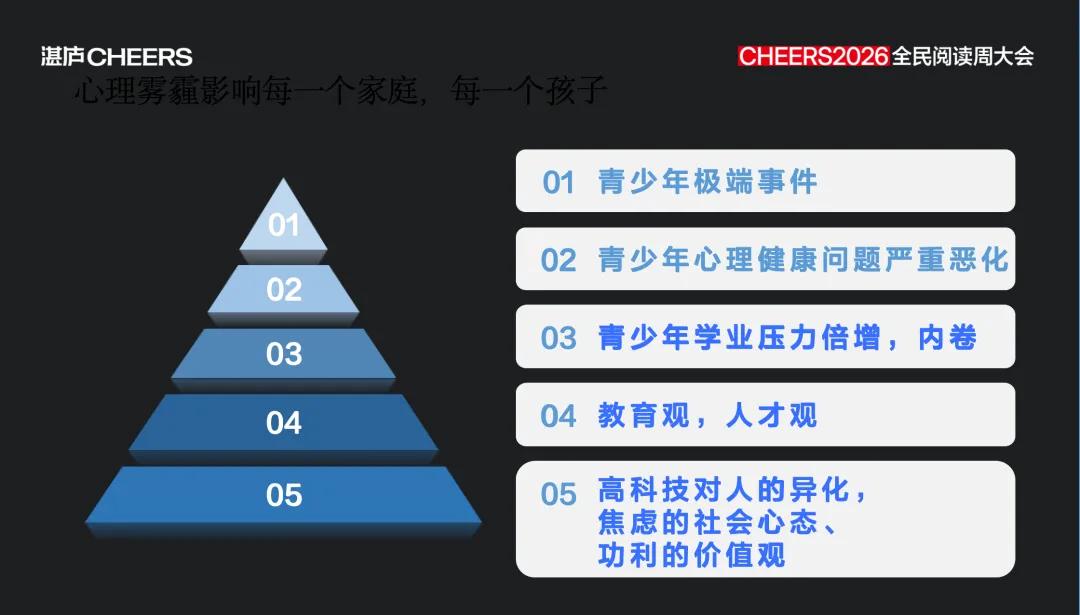
I often compare the current youth psychological crisis to smog. Just as we cannot rely solely on medical treatment to combat respiratory diseases caused by pollution, we cannot depend solely on counseling and medication for mental health issues. We must improve the environments in which children grow.
There is a societal anxiety about success and wealth, leading to a misguided belief that academic performance can determine a child’s future. This pursuit of certainty often results in greater uncertainty. We need to change our educational values to provide children with a clean and nurturing environment.
Call to Action
To address these challenges, we must work together as a society:
- Ensure children get adequate sleep by implementing internet restrictions after 10 PM.
- Establish phone-free schools, especially for younger students, to reconnect them with reality.
- Utilize AI technology to identify harmful online groups and intervene promptly.
- Enforce strict penalties for organizations promoting harmful online behaviors.
- Prevent technology from causing harm and creating new mental health issues.
Creating a positive environment is crucial for healing. Let us love and support our children, ensuring they have the best growth conditions, adequate sleep, and physical activity. It is time to take action! In the age of artificial intelligence, we must prioritize protecting children’s mental health.
Speaker: Xu Kaiwen
Editor: Liu Yaguang
Proofreader: Li Lijun
Version: Zhanlu Culture | China Textile Press
Date: April 2026
Comments
Discussion is powered by Giscus (GitHub Discussions). Add
repo,repoID,category, andcategoryIDunder[params.comments.giscus]inhugo.tomlusing the values from the Giscus setup tool.